
Rebuilding how learning content gets made
Halved production time per learning unit, with AI in the loop
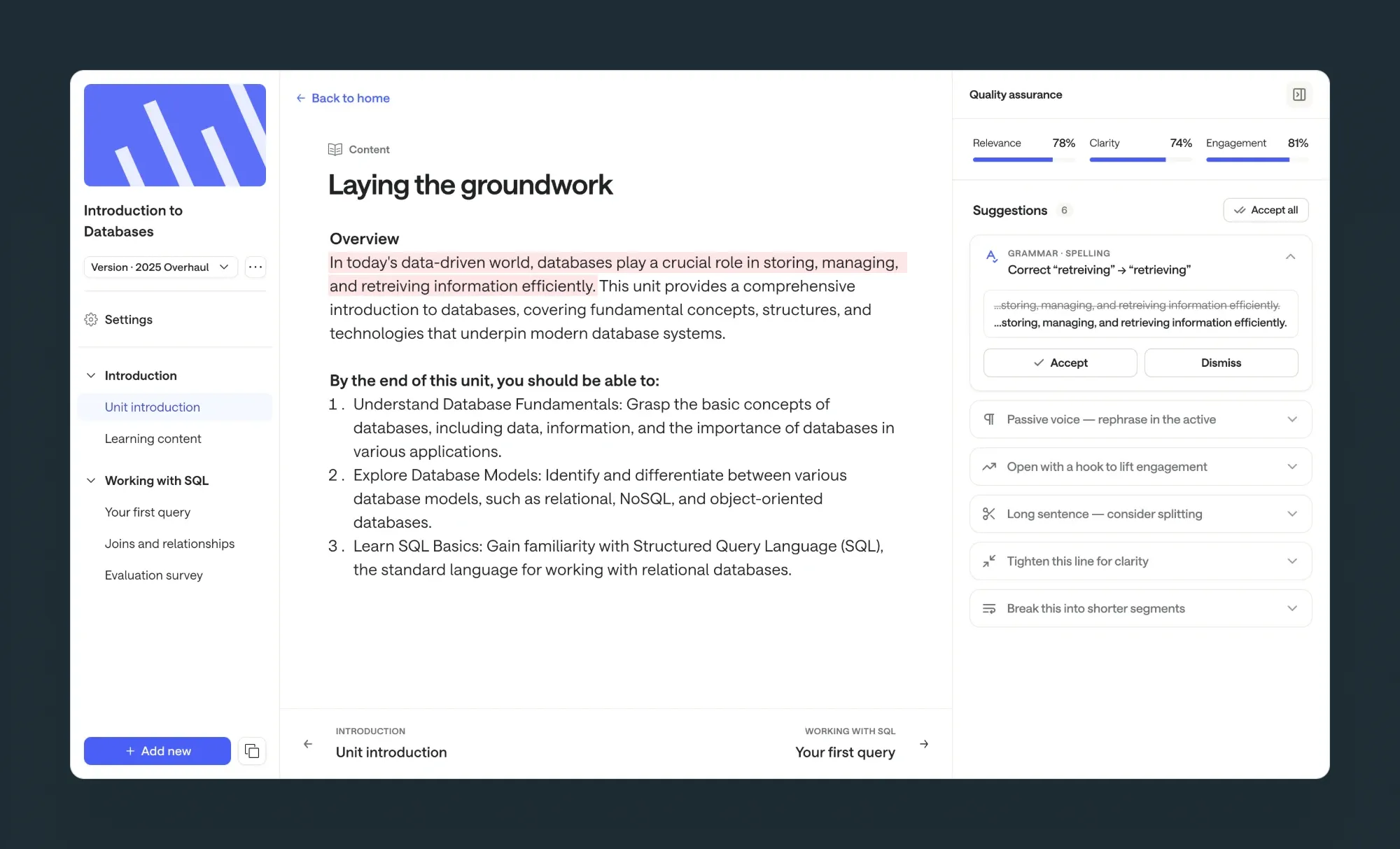
Multiverse is the UK's leading apprenticeship provider, a $1B+ tech unicorn with 20,000 learners in AI, data, and software engineering. Every programme has to meet strict UK standards, so content must be accurate and compliant at scale. As Product Designer for Learning Architecture, I led design on a suite of tools that replaced a slow, fragmented production workflow and removed engineering as a bottleneck for building programmes.
The problem
One learning unit took 40 hours to produce, and 73% of that time went into two phases: writing and review. Research with learning designers, programme managers, and engineering found three problems:
- Fragmented workflow. Draft in Google Docs, paste into the platform, reformat by hand, QA across spreadsheets and email.
- Quality checked too late. Compliance issues were caught after the work was done, sometimes by a learner hitting a problem in production.
- Engineering as a bottleneck. Adding a module meant filing a ticket. Customising a programme meant rebuilding it from scratch.
Employers wanted tailored courses, but the tooling made that nearly impossible. The problem wasn’t the people, it was the system they worked in.
Approach
I reframed the brief from fixing individual steps to redesigning the system. Three changes, each tied to a measurable outcome:
- Use AI to assist creation, with people in control, to cut authoring time.
- Move quality checks earlier to shorten review cycles.
- Bring the whole workflow into one product, so teams no longer depend on engineering.
I prototyped end to end in code, with AI in the loop, and had working flows in front of leadership and learning designers in days instead of weeks. That moved the conversation from “should we build this” to “when can we ship.”
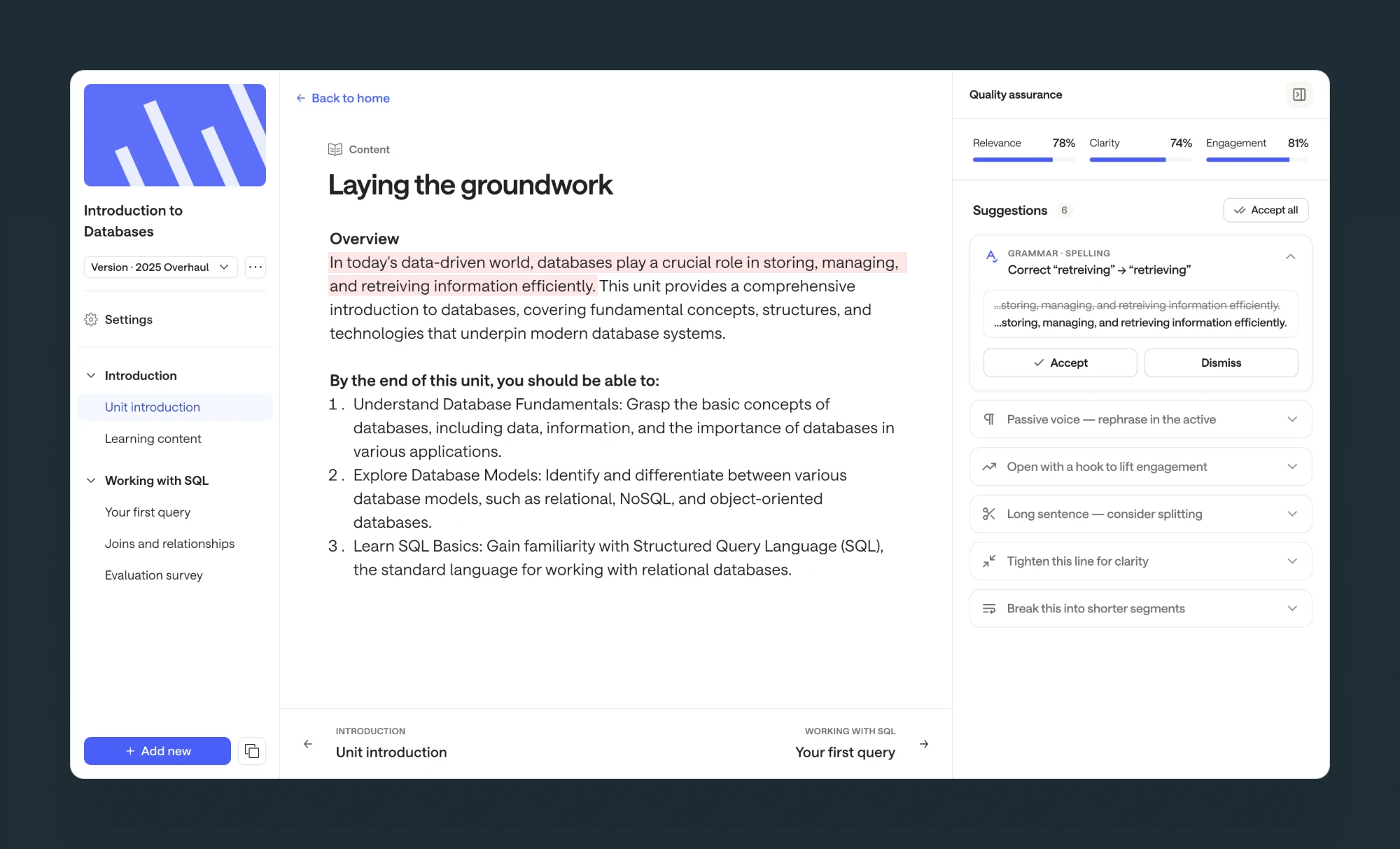
AI-assisted content editor
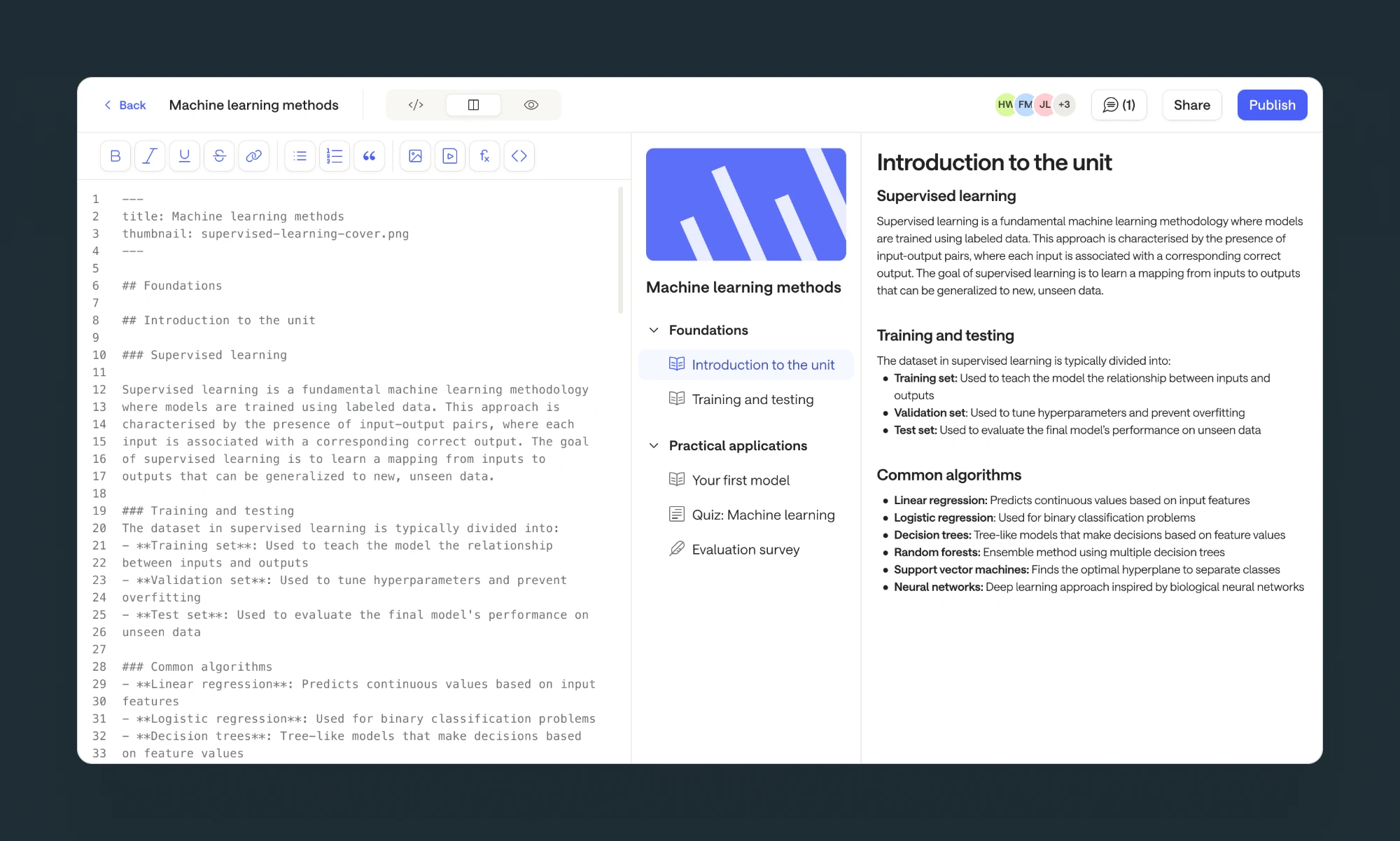
A new product, built from scratch, that replaced Google Docs, copy-paste, and spreadsheet QA with a single collaborative surface. Designers select the competencies and learning objectives, generate an AI draft, then refine it section by section. Drafting, comments, and export to the platform all happen in one place.
AI-assisted quality assurance workflow
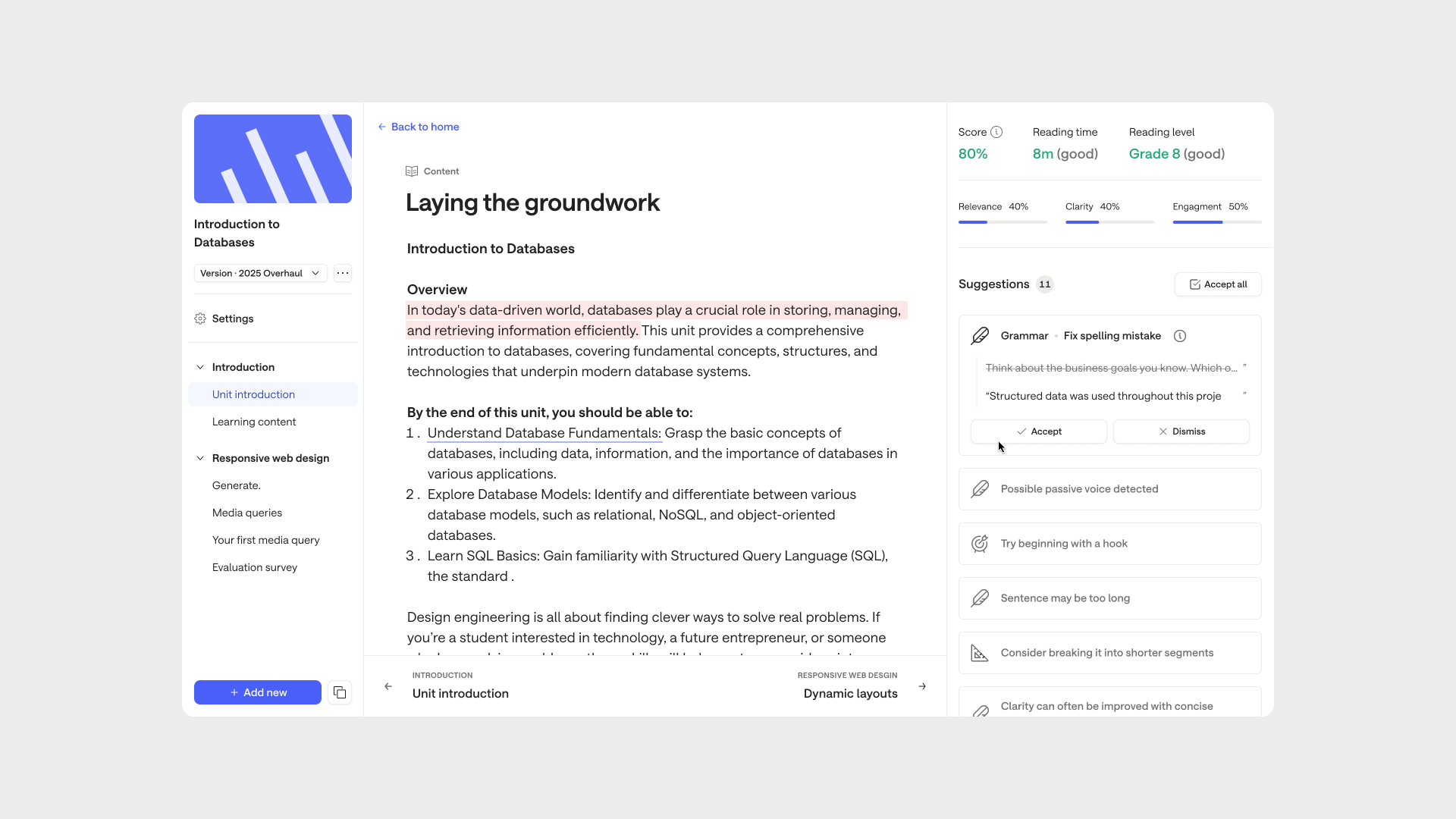
An automated review layer checks for structural gaps, accessibility issues, and compliance problems before a human reviewer sees the unit, so people spend their time on judgement instead of repetition. A content health dashboard shows the quality of the whole catalogue in one view.
Pathway editor
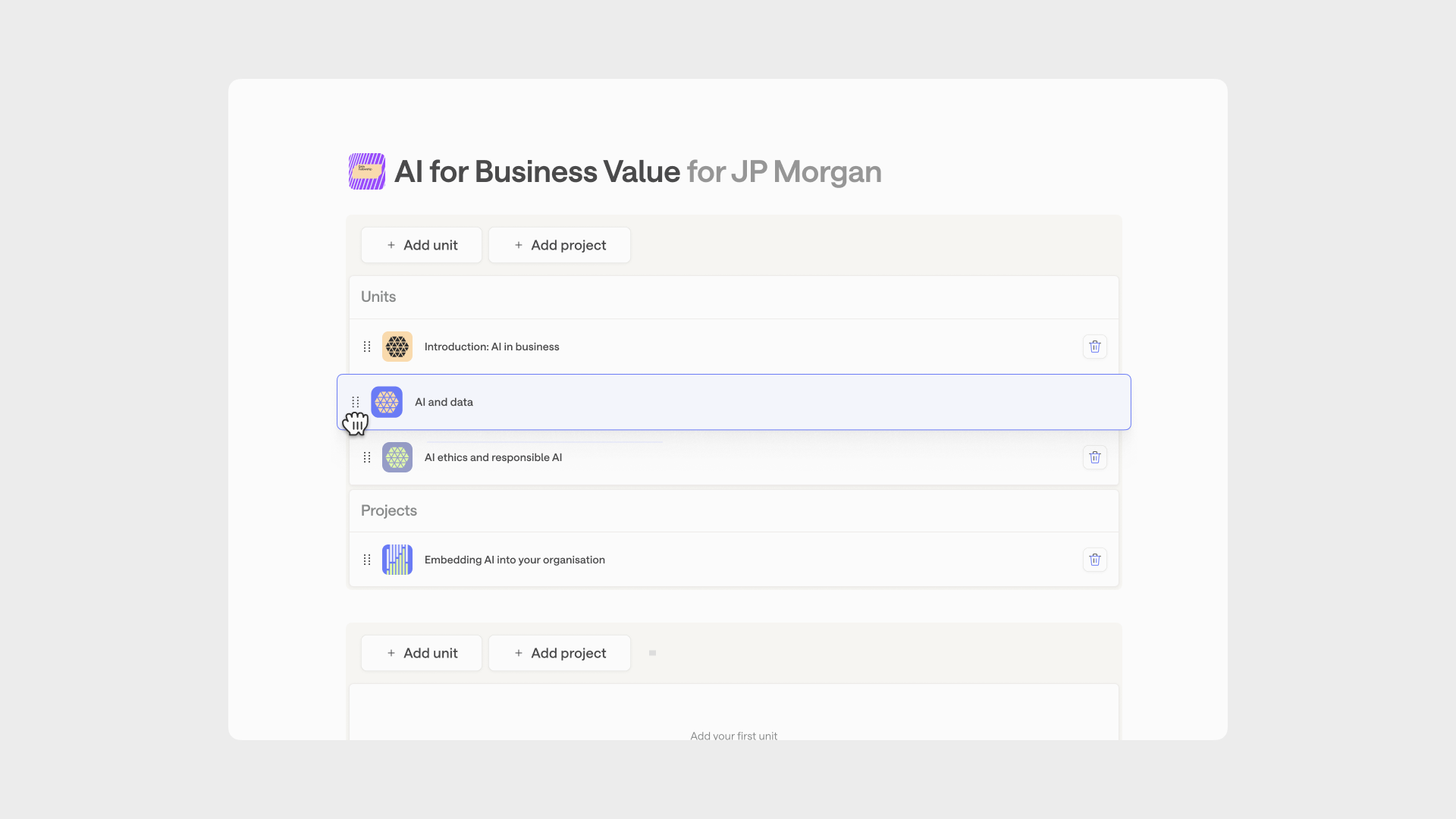
Teams configure programmes themselves, with compliance coverage tracked in real time and a warning whenever a change creates a gap. Customisation works at three inherited levels, company, cohort, and individual learner, so programmes are adjusted instead of rebuilt. Flexible, with guardrails.
Results
Roughly halved production time per learning unit, from ~40 hours to ~22 hours. That gave learning designers back capacity to spend on craft rather than formatting, let programmes launch faster, and lowered the cost of every unit of content. Programme creation moved off the engineering backlog entirely.
The lesson: AI in the loop and a single, unified system reinforce each other. Each tool removed a handoff, and together they replaced a fragmented process with one the business owns. Every edit, review, and QA check now produces data Multiverse owns, which improves the AI over time.
From collaborators
"A fearless designer who jumps into the unknown and gets the work done. Grab him if he's available, your team will thank you."

"Turns research insights into clear design decisions. Strong strategic thinking with close attention to detail."